
Are Blank Guns Legal in South Africa for 2025? The Definitive Guide
The question surrounding the legality of blank guns in South Africa has become increasingly urgent. With rising crime rates and a government review underway, what was once a straightforward topic is now clouded by uncertainty. Citizens, security professionals, and hobbyists alike are seeking clarity on the rules for 2025 and beyond.
The Interest in Blank Guns 2025
Heightened concerns over crime have driven many South Africans to explore various security options. Blank guns have a realistic appearance and are often considered a potential deterrent. However, their increasing use in criminal activities has prompted the South African Police Service (SAPS) to call for stricter controls, placing their legal status under intense scrutiny as we head into 2025. This situation makes understanding the law more important than ever for prospective and current owners.
This article cuts through the confusion. We will dissect the current legal framework, explain the proposed changes, and provide a clear, factual overview of what is and isn’t permissible. By examining the roles of the Firearms Control Act, the International Trade Administration Commission (ITAC), and the SAPS.
What Exactly Are Blank Guns?
Before diving into the legalities, it’s essential to understand what a blank gun is. A blank-firing gun is a replica or imitation firearm designed to simulate the firing of a real weapon. It produces a loud bang and a muzzle flash but is engineered not to discharge a projectile. This core functional difference is centred around the entire legal debate.
How Blank Guns Work, The Mechanism, Cartridges, and Effects
Blank guns operate similarly to conventional firearms, using a mechanism to strike the primer of a cartridge. However, the cartridges they use are different. A blank cartridge contains gunpowder but lacks a bullet. When fired, the gunpowder ignites, creating the sound and flash, and the pressure is vented through the barrel, which is often partially or fully obstructed to prevent the firing of a projectile.
Blank Guns vs. Live Ammunition Firearms
 A blank gun is engineered to prevent firing a projectile, while a real firearm is designed specifically to do so.
The fundamental difference lies in the ammunition and barrel design. A live ammunition firearm is designed to expel a projectile with lethal force. A blank gun is specifically made to prevent this. It cannot fire a live round without significant and illegal modification. This technical difference is why blank guns have historically been treated differently under South African law than traditional weapons.
Common Types and Their Realistic Appearance
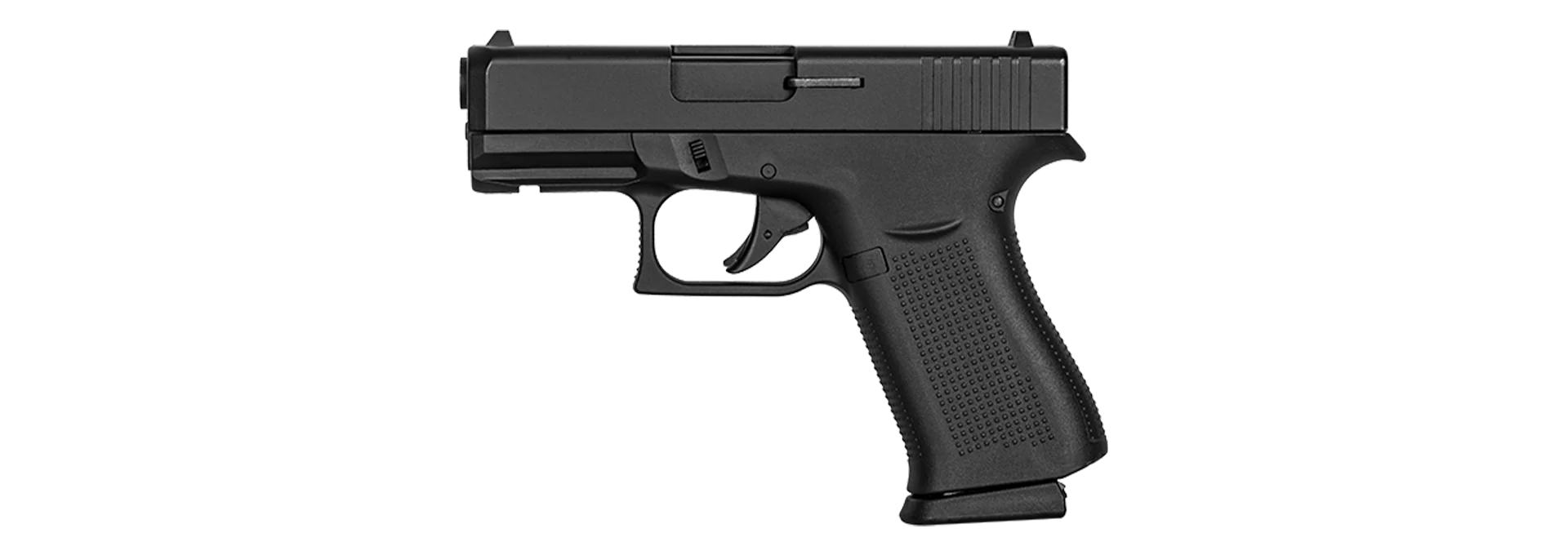
Blank guns are available in models that realistically replicate popular handguns and rifles. From the look and feel to the weight and mechanical action of the slide, they are often indistinguishable from real guns. This realism is a key factor in both their appeal for legitimate uses and their danger when used in criminal activities.
South Africa’s Legislation for 2025
The legality of blank guns in South Africa is not governed by a single, simple rule but by a complicated connection of acts and regulations that are currently under review.
The Firearms Control Act 60 of 2000 and Its Relevance to Blank Guns
The cornerstone of weapons legislation in South Africa is the Firearms Control Act (FCA). Crucially, the FCA defines a “firearm” as a device that can expel a bullet or projectile. Because blank guns are designed not to do this, they do not, by this strict definition, fall under the Act. This has historically meant that owning a blank gun does not require a firearm licence.
Diving Deeper: Section 5 of the Firearms Control Act – Prohibited Firearms
Section 5 of the FCA lists prohibited firearms, such as fully automatic weapons. While it doesn’t mention blank guns, it establishes a framework for absolute prohibition on certain types of weapons. The ongoing debate is whether the high-risk nature of realistic blank guns warrants bringing them under a similar, if not identical, regulatory regime.
The Nuance of Imitation Firearms: A Crucial Legal Distinction
While not classified as a firearm under the FCA, a blank gun is legally considered an “imitation firearm.” Misusing an imitation firearm, for example, by pointing it at someone to cause fear during a robbery, is a serious crime. The law prosecutes the act of intimidation or assault, regardless of whether the weapon was real or a replica.
Other Related Legislation Affecting Blank Guns
Beyond the FCA, other laws can apply. The Regulation of Foreign Trade Act and policies managed by the Department of Trade, Industry and Competition govern the importation of goods, which has become the primary focus for new regulations aimed at controlling the influx of these devices into the country.
Permits and Regulatory Requirements For Acquisition and Importation
The process of acquiring and importing blank guns is the central point of the proposed legal changes for 2025.
Is a Licence or Permit Required for Blank Guns in South Africa?
Currently, you do not need a firearm licence to purchase a blank gun within South Africa. Reputable dealers will typically require proof of age (18 or older) and an identity document. However, the purchase of the blank cartridges themselves may require you to be entered into an explosives register. This stands in stark contrast to the stringent licence requirements for actual firearms.
The Complexities of Importing Blank Guns into South Africa
The importation of blank guns is the area facing the most significant overhaul. Due to rising crime, the SAPS has requested that ITAC implement stringent controls. The government published draft proposals in the Government Gazette during 2024, signalling an imminent shift in policy. This could mean an outright ban on importation or the introduction of a strict permit system.
Key Authorities Involved: ITAC, SAPS, and the Department of Trade, Industry & Competition
Three main bodies are shaping the future of blank gun legality. The SAPS identifies the threat and advocates for control. The Department of Trade, Industry and Competition sets the policy. The International Trade Administration Commission (ITAC) is the authority that implements these policies by issuing or denying importation permits. Their coordinated action will define the rules for 2025.
Legitimate Use Cases, Limitations, and Misconceptions
Blank guns serve several lawful purposes, but their limitations, especially for self-defence, are widely misunderstood.
Lawful Applications of Blank Guns in South Africa
Legitimate uses are well-established. They are essential tools in the film and theatre industry for safe, realistic portrayals. They are also used in professional training scenarios for law enforcement and security personnel to simulate real-world encounters. Furthermore, they are used as starter pistols for athletic events.
The Dangers of Modification and Illegal Use
Attempting to modify a blank gun to fire a live projectile is not only illegal but also incredibly dangerous. The materials and construction of a blank gun are not designed to withstand the pressure of a live round, making a catastrophic failure and serious injury to the user highly likely.
Risks, Penalties, and Responsible Ownership
The misuse of blank guns carries severe legal and safety consequences.
Consequences of Illegal Possession, Importation, or Misuse
If new importation permits become mandatory, importing blank guns without one would be a criminal offence. Using a blank gun to commit a crime, such as robbery or assault, has the same penalties as if a real firearm were used. The courts focus on the intent and the victim’s perception of a deadly threat.
Safety Concerns and the Risk of Misidentification
A major risk is misidentification by police or armed citizens. In a high-stress situation, law enforcement officers are trained to respond to a perceived threat. They cannot distinguish a blank gun from a real firearm from a distance, which could have tragic and fatal consequences for the person holding the blank gun.
How to Store, Handle, and Transport Blank Guns (If Legally Owned)
If you legally own a blank gun for a legitimate purpose, it must be handled with the same respect as a real weapon. Store it securely and out of sight, transport it in a case, and never brandish it in public. Responsible ownership is key to preventing accidents and misunderstandings.
Staying Informed for 2025 and Beyond
The legal environment is constantly changing, and staying current is your responsibility.
Where to Find Official and Up-to-Date Information
For the most accurate information, regularly check the official websites of the South African Police Service (SAPS), the Department of Trade, Industry and Competition, and ITAC. Public notices and updates to trade policy will be announced through these channels. A simple website review can provide the latest details.
Conclusion: Navigating the Complexities of Blank Gun Legality in SA
As of now, blank guns are not technically “firearms” under the Firearms Control Act and do not require a licence for ownership. However, this is a dangerously simplistic view of the situation for 2025. The government, spurred by the SAPS, is actively moving to control their importation due to their undeniable link to serious crime.
The likely outcome is a new system of strict importation permits or an outright ban. Using a blank gun for self-defence is legal, but misusing one carries severe criminal penalties. The key takeaway is that the legal landscape is shifting rapidly. Before purchasing or importing a blank gun, you must review the latest government directives and understand that while you may not need a firearm licence, you are holding a device that carries immense legal and personal risk.