
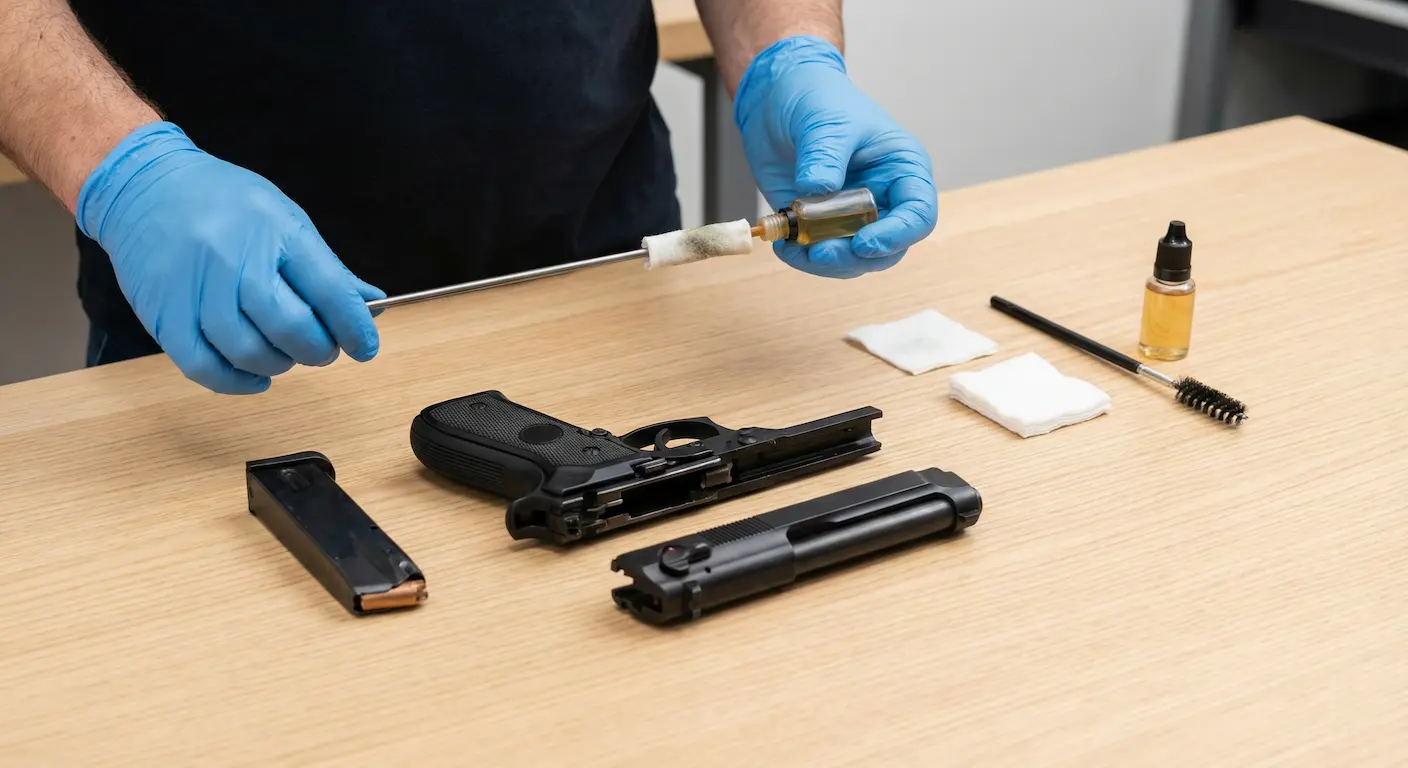
A blank firing pistol is more than a simple prop; it’s a piece of equipment that demands respect and proper care to function safely and reliably. Whether used for theatrical productions, sporting events, or training exercises, its performance is important.
However, many owners overlook one critical aspect of ownership: a consistent and thorough cleaning regimen. Unlike conventional firearms, blank guns are exposed to uniquely corrosive and dirty residue, making thorough maintenance not just a recommendation, but a necessity for the life span and performance of your blank gun.
This guide will help you maintain your blank firing pistol. We’ll explore why cleaning is so critical, establish a practical schedule, detail the necessary safety precautions, and walk you through a comprehensive , step-by-step cleaning process that will keep your device in top operational condition.
What is a blank gun and how does it differ from a real
firearm?
A blank gun is designed to simulate the firing of a real firearm, producing a loud sound and muzzle flash without discharging a projectile. The key difference lies in the ammunition and barrel construction. Blank cartridges contain gunpowder but don’t have a bullet, and the barrel is typically obstructed or designed in a way that prevents a projectile from being fired. While they are not considered traditional firearms in the same legal sense everywhere, they operate on similar mechanical principles, using the pressure from the ignited gunpowder to cycle the action.
Why is regular cleaning important for blank guns?
Regular cleaning is vital because the gunpowder used in blank ammo is notoriously dirty and corrosive. This residue, a mix of carbon fouling, unburnt powder, and primer compounds, rapidly accumulates on internal the components. This buildup can slow down the smooth operation of the slide, cause the magazine spring to stick, and lead to malfunctions like feeding issues or failures to cycle. Proper maintenance ensures every component functions as intended.
Why You Need To Clean Your Blank Firing Pistol
The rising popularity of blank firing pistols, reflected in a global search interest that often spikes during summer and autumn months, means more owners need to understand their specific maintenance requirements. Unlike the ammunition for live-fire firearms, blank cartridges often burn less completely, leaving behind a significant amount of residue. This fouling is not just messy; it’s chemically corrosive and, if left unchecked, can permanently damage the metal components and degrade the protective finish of your product.
What are common issues caused by not cleaning a blank gun?
Neglecting your blank gun’s cleaning needs will inevitably lead to performance issues. Common problems include:
- Failure to Feed: Residue in the magazine or on the feed ramp can prevent new cartridges from chambering correctly.
- Failure to Eject: Carbon fouling can obstruct the extractor or ejector, causing spent casings to become stuck.
- Sluggish Slide Action: Buildup in the slide rails creates friction, slowing the cycling process and causing jams.
- Corrosion and Pitting: The corrosive salts in blank ammo residue can eat away at the metal, causing irreversible rust and pitting that weakens the components.
When is the best time to clean your blank gun?
The golden rule for blank gun care is to perform a cleaning after every use. The corrosive residue begins to attract moisture and attack the metal almost immediately. A good cleaning neutralises these agents and removes the fouling before it can harden or cause damage, ensuring your blank pistol is always ready for its next use.
Why Blank Firing Pistols Require Dedicated Maintenance
The mechanical action of a semi-automatic blank pistol relies on a delicate balance of forces from the gas pressure, recoil spring, and moving parts. Carbon fouling disrupts this balance by adding friction and clogging tight-tolerance areas. Dedicated maintenance is the only way to ensure these intricate parts move freely, preserving the reliability and extending the operational lifespan of the firearm.
How do you properly clean a blank gun?
Proper cleaning involves a systematic process: ensuring safety, disassembling the pistol to its basic components, scrubbing away residue with appropriate solvents, thoroughly drying each part, applying a light lubricant to key areas, and reassembling correctly. Each step is crucial for a complete and effective maintenance session.
When to Clean: Establishing Your Blank Firing Pistol Cleaning Schedule
A consistent cleaning schedule is the foundation of reliable performance. While “after every use” is the primary guideline, other situations also demand attention.
How often should you clean your blank gun for optimal performance?
For optimal performance, a full cleaning should be conducted after each firing session, regardless of whether you fired five cartridges or fifty. This proactive approach prevents the cumulative effects of residue buildup.
After Every Use: Critical for Frequent Operation
This is the most critical time for maintenance. Cleaning immediately after firing removes the fresh, corrosive gunpowder residue before it has a chance to attract moisture and damage the pistol’s metal and finish. This simple habit is the single most effective way to prevent long-term damage.
After Extended Storage or Before First Use
Before putting a blank gun into long-term storage, a thorough cleaning and light coating of protective gun oil are essential to prevent rust. Conversely, a pistol that has been stored for a long time should be inspected and wiped down before its first use to remove any dust, debris, or thickened lubricant.
When Detecting Performance Issues
If you notice any sluggishness in the action, feeding problems, or other malfunctions, your first course of action should be a detailed cleaning. Often, these performance hiccups are the direct result of fouling and can be resolved with proper gun care.
Before Long-Term Storage
A final, meticulous cleaning before storage is non-negotiable. This ensures no corrosive agents are left on the metal surfaces, protecting your investment while it’s not in use. Applying a quality lubricant or gun oil provides a protective barrier against humidity and oxidation.
Safety First: Essential Precautions Before You Begin
Safety must always be your top priority. Even though blank guns don’t fire projectiles, they are not toys and must be handled with the same respect as any firearm.
Are there any safety precautions to take before cleaning a blank gun?
Absolutely. Before you begin any cleaning or maintenance, you must ensure the pistol is completely unloaded and safe to handle. Remember that blank cartridges can still be dangerous. According to a study in the Journal of Forensic and Legal Medicine, the gas jet from a blank can cause serious or even fatal injuries at close range.
Verify the Pistol is Unloaded
Always treat the blank gun as if it were loaded. Point it in a safe direction, remove the magazine, and visually and physically inspect the chamber to confirm that no ammunition is present.
Work in a Well-Ventilated Area
Cleaning solvents and lubricants release fumes that can be harmful if inhaled in a confined space. Always work in a room with good airflow or outdoors to ensure proper ventilation.
Protect Your Eyes and Hands
Wear safety glasses to protect your eyes from cleaning solvents and debris. Nitrile gloves will protect your hands from harsh chemicals and make cleanup easier.
Consult Your Owner’s Manual
Every blank gun model is slightly different. Your owner’s manual provides specific instructions for disassembly (field stripping) and reassembly. Following these manufacturer orders is crucial to avoid damaging your product.
Gathering Your Gun Care Arsenal: Essential Cleaning Supplies for Blank Firing Pistols
Having the right tools makes the job easier and more effective. The overall firearms market, projected to reach USD 72.1 Billion by 2034, ensures that high-quality gun care products are readily available for all owners.
Cleaning Solutions and Solvents
Choose a solvent specifically designed for firearms. These products are formulated to break down carbon fouling, gunpowder residue, and trace amounts of copper without harming the pistol’s finish.
Which cleaning solvents are safe to use on blank guns?
Most reputable gun cleaning solvents are safe for the metal components of blank guns. However, always test a small, inconspicuous area first to ensure it doesn’t react negatively with the specific finish on your pistol.
Brushes, Swabs, and Patches
You will need a set of nylon or bronze cleaning brushes to scrub the barrel and other heavily fouled areas. Cotton patches and swabs are essential for applying solvent and wiping away grime from smaller components.
Lubricants and Protective Oils
A quality gun oil or lubricant is critical. It reduces friction on moving parts like the slide rails and protects the metal from corrosion. Use it sparingly to avoid attracting excess dirt.
Get a protective cleaning oil here
Cleaning Rod and Bore Guide
A cleaning rod properly sized for your pistol’s barrel is necessary to push brushes and patches through the bore. A bore guide helps protect the barrel from being scratched by the rod during cleaning.
Microfiber Cloths and Rags
Soft, clean cloths are needed for wiping down the exterior of the blank gun, removing fingerprints, and applying a final protective coat of oil.
Step-by-Step Guide: Thoroughly Cleaning Your Blank Firing Pistol
With your supplies gathered and safety precautions observed, you are ready to begin the cleaning process.
Field Stripping and Disassembly
Follow your owner’s manual to safely disassemble the pistol into its main components: the frame, slide, barrel, and recoil spring/guide rod. Remove the magazine and set it aside for separate cleaning. This step gives you access to all the critical internal surfaces.
Cleaning the Barrel and Chambers
Apply solvent to a bore brush and run it through the barrel several times to loosen the stubborn carbon fouling. Follow up with clean patches soaked in solvent until they come out clean. Finally, run a dry patch through, followed by a lightly oiled patch to protect the internal metal surfaces.
Conclusion
Mastering how to clean your blank firing pistol is important for safe use, reliability, and longevity. The uniquely corrosive nature of blank ammunition residue makes regular maintenance a responsibility of ownership. Having a routine of cleaning after every use, you directly stop the harmful effects of carbon fouling and prevent the malfunctions and corrosion that affect neglected equipment.
Your key takeaways should be:
- Safety is paramount: Always verify your blank gun is unloaded before beginning any maintenance.
- Consistency is crucial: Cleaning after every session is the most effective way to protect your product’s metal and finish.
- Use the right tools: Proper solvents, brushes, and lubricants make the job more effective and protect your investment.
By following the steps outlined in this guide, from safe handling and proper disassembly to meticulous cleaning and correct lubrication, are actively preserving the function and value of your blank firing pistol. A commitment to gun care ensures that whether you need it for a critical training scenario or a theatrical performance, it will operate at its peak, exactly as you expect it to.